What we do

Research themes

We develop and validate tailored experimental and computational tools to understand how soft fibre-based materials derive their properties, how those properties go wrong in disease, and how we can restore them.

wound icon Mechanobiology
of scarring
3D printer icon
Bioinspired
material design
skin icon tongue icon
Soft tissue
biomechanics
FBL Lab Logo

Select a sector to jump to that theme, or scroll to read about all three.

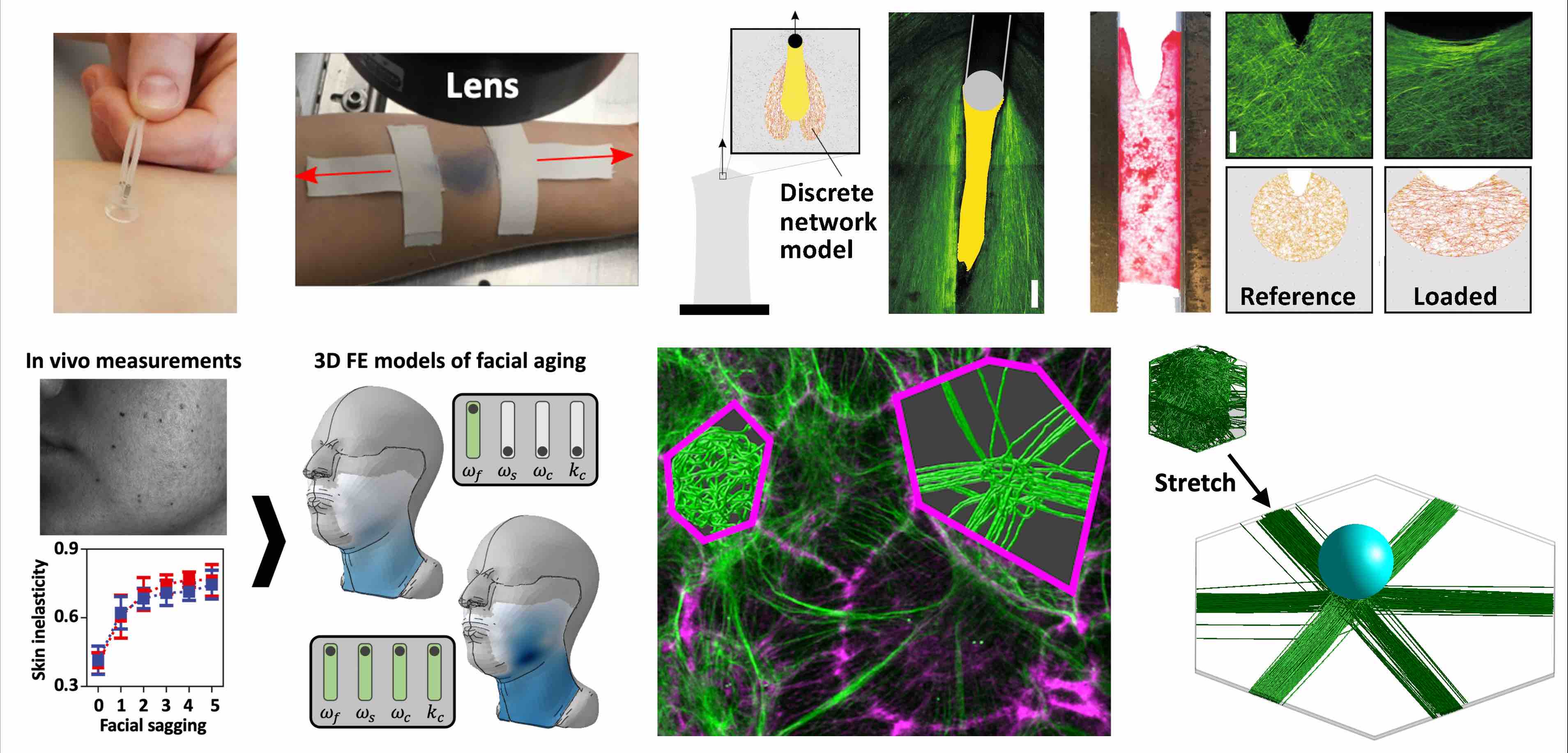
Collage of images from our soft tissue biomechanics research

Soft tissue biomechanics

We characterize the multiscale mechanical behaviour of fibrous biological materials ranging from skin and oral tissues to engineered tissue surrogates. Our experimental toolkit includes multiaxial tensile testing with full-field optical strain analysis, suture retention testing, in situ micromechanical characterisation, and nanoindentation.

We use commercial and in-house software to accurately capture the nonlinear, anisotropic, and time-dependent behaviour of collagenous tissues and cytoskeletal networks, with applications ranging from fundamental biophysics to surgical planning, clinical diagnosis, and the design of biomedical materials and devices.
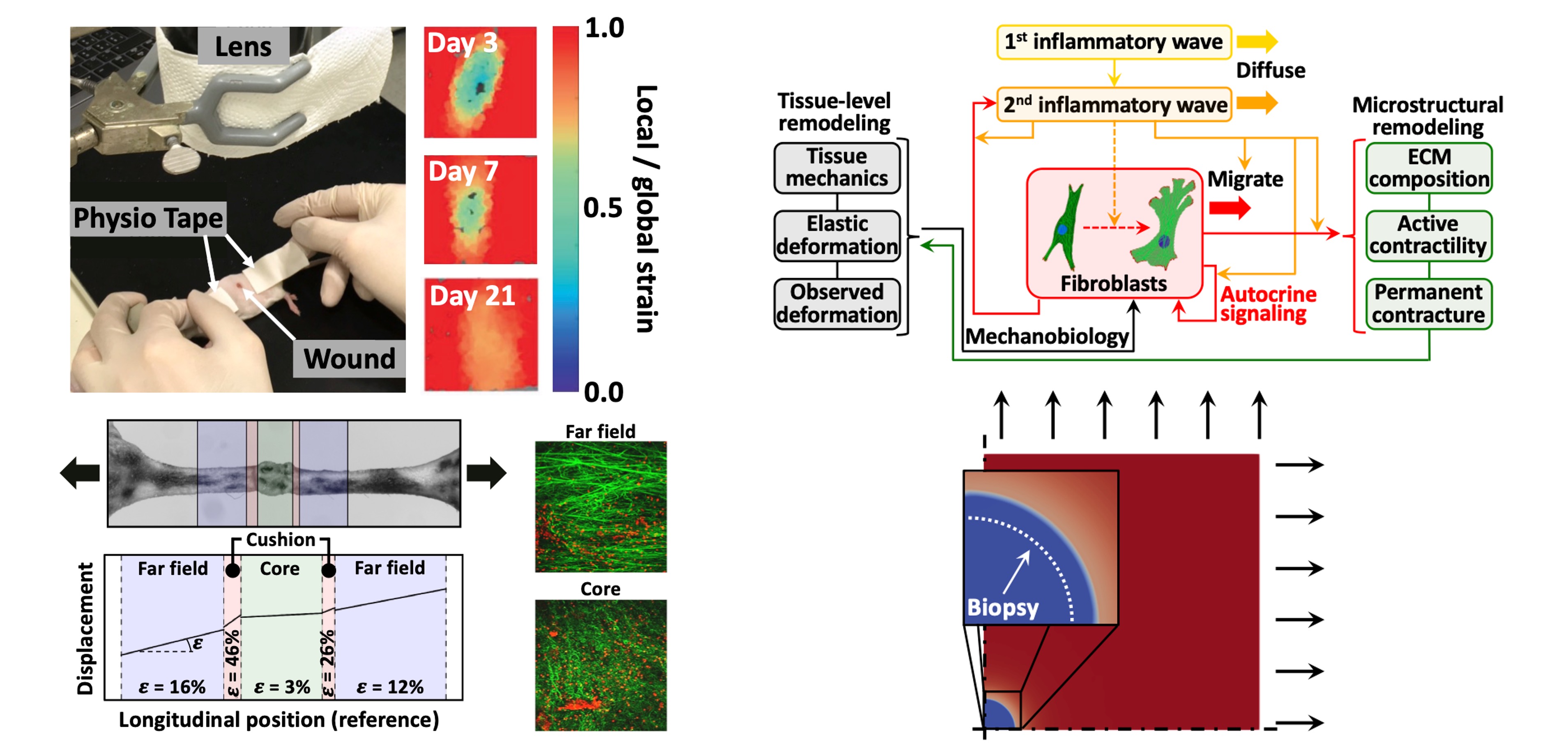
Collage of images from our mechanobiology of scarring research

Mechanobiology of scarring

We aim to unravel the mechanobiological signals determining alternative tissue repair trajectories. We are particularly intrigued by the duality between skin and oral mucosa: both undergo continuous deformations, but skin develops fibrotic scars while oral mucosa can heal with minimal scarring.

We adopt a combination of in vivo and ex vivo measurements, in vitro models, and computational simulations to investigate matrix deposition and remodelling, corresponding fibroblast activation, and emergent tissue deformability.

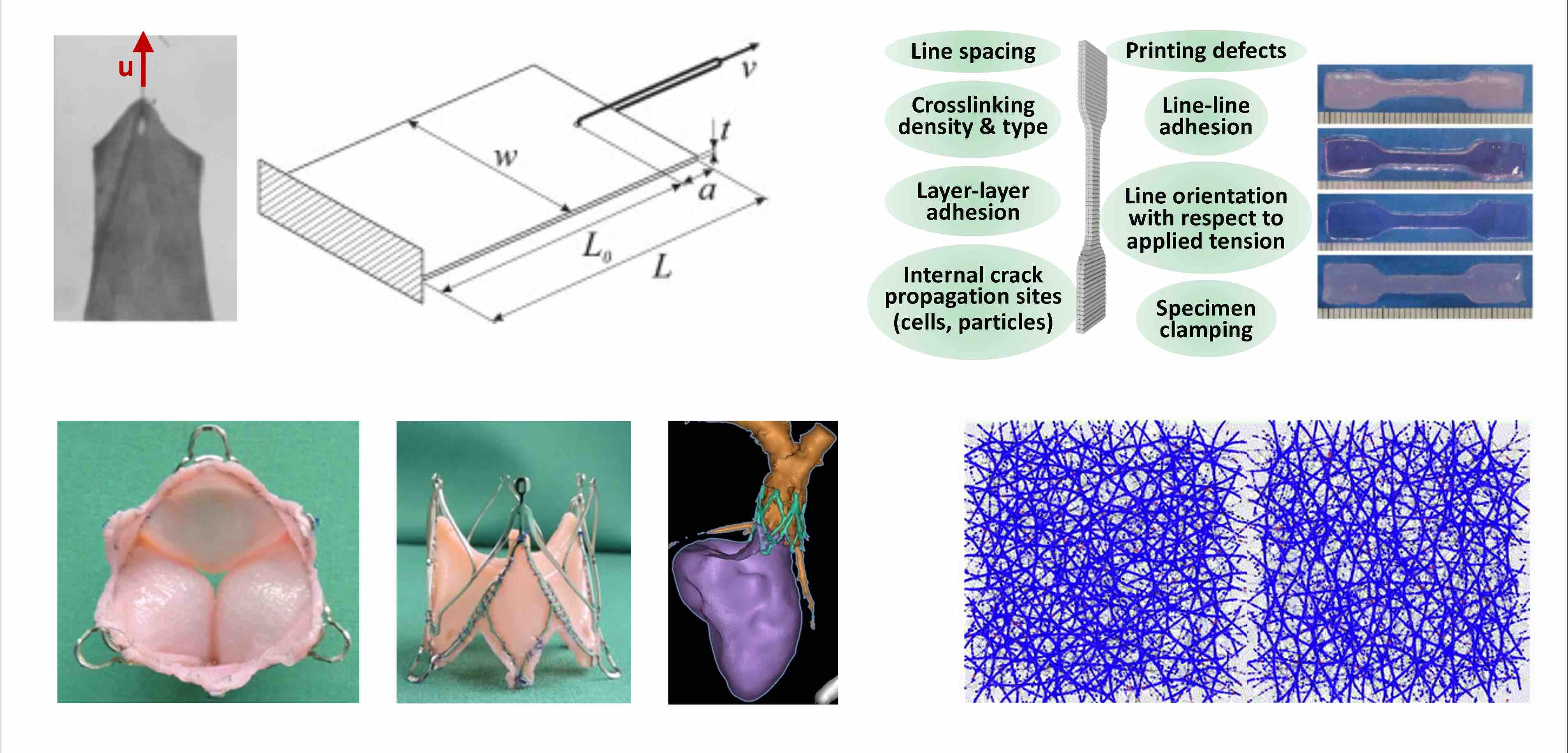
Collage of images from our bioinspired material design research

Bioinspired material design

We innovate material design by harnessing biological design principles. Our interests include learning from oral wound healing mechanisms to improve wound treatment, devising biomaterials that mimic skin’s native deformability, and designing tuneable technical materials inspired by the cytoskeleton.

We combine multiscale computational simulations with additive manufacturing and experimental characterization to design structure-property relationships across materials’ length and time scales.